


It often happens quite by accident: You glance out over the garden in the early evening, the light softens, and you immediately notice that the lawn looks uneven. Some blades of grass are fluttering in the breeze, others are leaning slightly to one side, and still others simply seem too long. It's precisely in moments like these that you automatically wonder how often you should mow the lawn to keep it uniform and prevent it from constantly looking "out of shape."
Many people realize that their chosen mowing schedule isn't always right and become uncertain. Sometimes the grass grows faster than expected, and sometimes they accidentally cut it too short. This becomes apparent later in uneven patches or uneven regrowth. Mowing frequency has a greater impact on the overall appearance than is often realized.
Traditional lawnmowers require time and planning. A robotic lawnmower like the Navimow i Series, on the other hand, keeps to the schedule automatically. But before discussing that, it's worth looking at the real question: How often does mowing the lawn actually make sense?

Contents
- Why mowing frequency is so important
- How often should you mow the lawn – depending on the season?
- Traditional vs. automated lawn mowing
- Why frequent cuts bring more benefits
- How the Navimow automatically maintains the ideal mowing frequency
- Conclusion – this is how often you should mow the lawn
- Frequently Asked Questions (FAQ)
Why mowing frequency is so important
A lawn only looks truly even when mowed regularly. Each cut stimulates growth, causing the blades to branch out more and making the lawn appear denser overall. This effect is often overlooked, but it's precisely what determines how robust the lawn will remain throughout the summer.
1. The biological background
Grasses are among the plants that tolerate regular mowing remarkably well. Once the top few centimeters are cut, many varieties produce more side shoots. This results in a denser turf and helps the soil retain moisture for longer.
Conversely, if you mow too infrequently, the effect reverses: the blades of grass become soft and long, shading the young shoots below and preventing sufficient air from reaching the soil. This leads to the faster formation of moss cushions or a thin layer of thatch.
Studies by the European Geosciences Union (EGU) have shown for years that frequent, light mowing improves regeneration and makes the turf more resilient in the long term. This is especially true in heavily used gardens.
2. The 1/3 rule as a guideline
A simple rule of thumb is: never cut more than a third of the stem length at one time. Removing more than that causes the plant to lose too much leaf area, which directly slows down its photosynthesis. It then takes longer to recover.
If, on the other hand, you mow more frequently and only in small increments, the lawn remains vital, denser and more stable overall.
How often should you mow the lawn – depending on the season?
How often you should mow the lawn depends heavily on the time of year and how actively the grass is growing. Besides temperature and rainfall, the overall health of the lawn also plays a role.
Basically, the lawn follows an annual rhythm, and if you take this into account a little, the area will look much more well-kept.
This is particularly noticeable in spring: two warm days and the blades of grass suddenly shoot up. In summer, on the other hand, the weather dictates the pace: after rain, the grass grows tall, while in hot weather it tends to stagnate.
And as autumn approaches, the growth becomes more leisurely. The intervals change accordingly.
A rough guideline for how often you should mow your lawn looks like this:
| season | Mowing frequency | Cutting height | Notes |
|---|---|---|---|
| Spring | 1-2 times per week | 4–5 cm | Cut regularly when temperatures reach 10°C; fertilize after the first cut. |
| Summer | approximately once a week (more often if growth is rapid) | 5–6 cm | Mow higher in hot weather; do not cut at midday. |
| Autumn | every 10–14 days | 4–5 cm | Mow before frost; remove leaves regularly. |
| winter | no mowing intervals | unchanged | Avoid walking on the area if possible; the lawn will protect itself. |
These values are guidelines. They help to better match the natural rhythm without stressing the blades of grass. By adhering to them, the turf remains stable, and the lawn recovers more quickly from stress or dry periods.
Spring – the growth spurt
As soon as temperatures remain consistently above approximately 10°C, the lawn noticeably begins to grow. Many areas then experience significant regrowth within just a few days. During this phase, it's worthwhile to mow more frequently, as the grass develops side shoots and the turf becomes denser.
- Recommendation for spring: 1-2 times per week
- Cutting height: 4–5 cm
Tip:
- Fertilize evenly once after the first mowing of the year. This gives the roots a boost and helps the lawn get off to a better start in the season.
Summer – consistency and protection
In summer, lawn growth is heavily dependent on the weather: after rain, the grass grows quickly, but hardly at all during heat waves. Especially in high temperatures, a slightly higher cutting height is helpful because the blades shade the soil better. This helps retain moisture in the ground for longer.
- How often should you mow the lawn? Approximately once a week, more often if the lawn is growing strongly.
- Cutting height: 5–6 cm
Tip:
- Do not mow in the midday heat. The blades of grass are then under additional stress and dry out faster.
Autumn – Preparing for winter
As temperatures drop, growth slows considerably. Nevertheless, the lawn should be monitored. The last cut should be done shortly before the first frost to prevent the grass from becoming too long before winter.
- Mowing frequency in autumn: every 10–14 days
- Cutting height: 4–5 cm
Tip:
- Remove fallen leaves as regularly as possible. Rot quickly develops under wet leaves, and the stems will topple over.
Winter – the resting phase
Once temperatures drop below approximately 6–8 °C, the lawn practically stops growing. Mowing then offers no benefit and would only put unnecessary stress on the blades.
- Mowing frequency in winter: none
Tip:
- Avoid walking on the area if possible. Frozen stalks break easily and often leave light-colored pressure marks in the spring.

Traditional vs. automated lawn mowing
The difference is clear in this respect: traditional lawnmowers operate at relatively large intervals, while a robotic lawnmower operates in small, regular steps. And it is precisely this frequency that often determines how even a lawn looks.
1. Traditional mowers: Effort and clear limitations
A regular lawnmower requires a bit of planning, but above all, time and effort. Many garden owners, however, only manage to mow once a week at most – sometimes even less often. This is because rain, busy weeks, or a short vacation can quickly disrupt the routine.
And that's precisely when it becomes apparent how often you should mow the lawn to keep it even. If you don't mow for a few weeks, you'll immediately notice the difference in the individual, soft-looking patches.
Furthermore, the cutting quality depends heavily on the user: blunt blades, a setting that is too low, or an unfavorable time will damage the stalks more than you might think.
2. Automatic cut: even and gentle
A robotic lawnmower works on a different principle. Instead of mowing once a week, it intervenes regularly – often daily or several times a week. It only cuts minimal lengths, thus keeping the lawn at a constant, optimal height.
Why frequent mowing works better:
The Navimow i105, for example, handles these processes automatically:
- App control: Mowing zones and times are set directly in the app.
- Sensors: The device itself detects obstacles, slight unevenness and wet areas.
- Weather control: The system pauses when there is moisture and only resumes when the ground is dry enough again.
This eliminates the need for a rushed cut and instead creates a consistent rhythm. The robot reacts to the actual growth – not to when you have time. This is one of the reasons why automated cutting delivers a denser, more even result in the long run.
Why frequent cuts bring more benefits
You might think that mowing infrequently is better for your lawn. In fact, the opposite is true: the more often you mow, the more stable the lawn becomes. The grass responds very positively to short, regular mowing – and you'll see the results quickly.
1. Density instead of length
Short intervals between waterings keep the stalks stable and prevent height variations. This is more important in everyday life than many people realize. The stalks grow less in height and more in width.
This creates a dense network of roots and shoots that better shades the soil and retains moisture for longer. This is a clear advantage during dry periods because the area remains more resilient.
2. Better nutrient distribution
Mowing at short intervals produces only very fine clippings. These decompose quickly and act like a gentle mulch. They don't stress the turf but gradually return the nutrients they contain to the soil. This keeps the soil consistently nourished without the need for constant fertilization.
3. A uniform appearance
Regular mowing prevents significant unevenness and reduces frayed edges. The lawn appears more harmonious, the turf remains dense, and even heat waves are less likely to cause visual imperfections. Ultimately, a consistent mowing schedule yields the best results, regardless of how often you can mow the lawn.
What is crucial is therefore less the individual cut than the distance between them.

How the Navimow automatically maintains the ideal mowing frequency
A clear advantage of automated systems is their ability to maintain the optimal mowing rhythm consistently. The Navimow adapts to real-world conditions rather than fixed schedules – a crucial difference compared to traditional mowers.
1. Automatic scheduling
In the app, you define how often the lawn should be mowed and which areas should be included. The robot then implements this plan independently, taking into account temperature, humidity, and previous mowing cycles. This ensures a consistent cut, even when you're not home or the weather changes.
2. Precise navigation through sensors
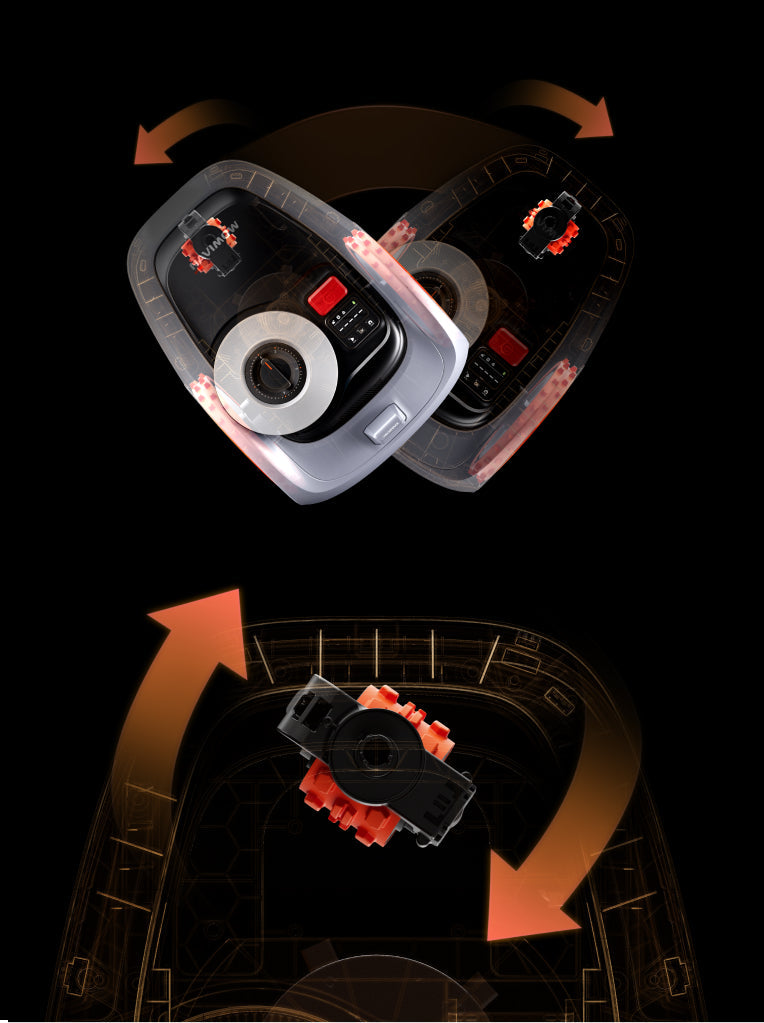
The Exact Fusion Locating System (EFLS 2.0) ensures that the robot knows its exact position at all times. It travels clean paths, avoids unnecessary overlaps, and covers the entire area.
The VisionFence™ camera detects obstacles, uneven terrain, and minor disturbances. The robot immediately adjusts its route without any intervention from you.
3. Wireless flexibility
The Navimow doesn't require boundary wires. Mowing zones are defined digitally and can be changed at any time if a new flowerbed, path, or play area is added. This makes maintenance much more flexible and prevents constant remodeling in the garden.
| 5 tips for even skincare | Even with an automated system, it's worth paying attention to a few details. They often determine how stable and harmonious the lawn develops. |
|---|---|
| 1. Adjust the cutting height | In spring, the lawn can be cut a little shorter, while in summer it should be left longer to shade the soil. This adaptation protects the turf and helps the lawn to better withstand temperature and weather fluctuations. |
| 2. Check the blades regularly. | Sharp blades ensure clean cuts. Dull blades tear at the grass and leave light-colored edges – an unnecessary stress factor for the lawn. A quick check also extends the lifespan of the cutting parts. |
| 3. Ventilate the floor | Aeration allows more oxygen to reach the roots. This strengthens the lawn's vitality and improves nutrient uptake. Particularly stressed areas benefit noticeably. |
| 4. Wait after the rain. | Damp grass blades break easily and are difficult to cut. The turf then takes longer to recover. It's better to wait until the surface has dried. |
| 5. Change the mowing direction | Changing the direction occasionally will prevent permanent marks. The lawn will stand up more evenly, and the area will appear more uniform overall. |
Conclusion – this is how often you should mow the lawn
How often you should mow your lawn always depends on the actual growth. The following serve as a guideline:
- Spring: 1-2 times per week
- Summer: about once a week
- Autumn: every 10–14 days
More important than the individual cut, however, is the consistent rhythm. A robotic lawnmower like the Navimow maintains this frequency automatically, works gently, and evenly distributes fine clippings as natural fertilizer. This keeps the lawn permanently dense, well-maintained, and visually uniform – without any additional effort.
More information can be found on the Navimow website.
Frequently Asked Questions (FAQ)
Is it good to mow the lawn often?
Yes. Frequent mowing encourages side shoots, strengthens the turf, and improves growth.
Does frequent mowing make the lawn denser?
Yes. Regular pruning encourages new side shoots and thickens the area.
What is the lawn 1/3 rule?
Never cut more than a third of the stem length, so that enough leaf mass remains for recovery.
How often should you mow the lawn in summer?
Usually once a week. More often after rain; increase cutting height in hot weather.
Does mowing reduce weeds?
Partly. Frequent mowing prevents flowering and seed formation and strengthens the lawn's competitive ability.

Share: